
Recently, the braking test incident of a heavy electric vehicle has drawn wide attention across the automotive industry. It once again raises a critical question for engineers and vehicle manufacturers: what is the bottom line of reliability for an electric vehicle braking system? This is where the Brake Resistor steps in as an indispensable safeguard for heavy-duty electric mobility.
When electric vehicles brake, the motor works in reverse and generates electric energy while producing braking torque. If this regenerated energy cannot be absorbed or recycled in time, the DC bus voltage will surge rapidly and damage core components such as inverters and capacitors. At this moment, the braking unit and brake resistor kick into action. The braking unit turns on quickly and diverts excess energy to the brake resistor, which converts electric energy into heat and dissipates it safely.
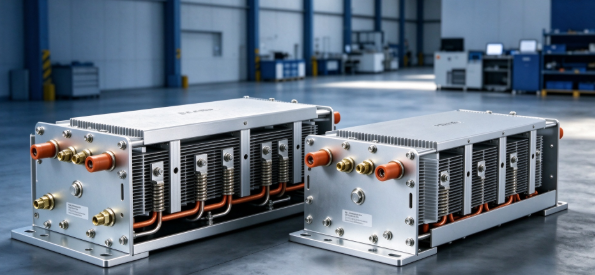
Simply put, mechanical service brakes handle the final stop, while the brake resistor absorbs massive kinetic energy generated during deceleration and downhill travel. Without it, heavy-duty electric vehicles will lose a core layer of protection for long downhill braking.
Three reasons explain why the brake resistor is especially vital for heavy-duty working conditions.
First, the kinetic energy involved is enormous. Mining trucks and heavy haul vehicles weighing dozens or even hundreds of tons build up tremendous energy on long slopes. Continuous heavy friction will trigger brake fade: the friction coefficient drops, braking distance extends, and in severe cases, mechanical brakes fail completely.
Second, working cycles are repetitive. Mining routes feature steep, long slopes. A single shift may involve dozens of braking cycles, creating extreme challenges for the service life and stability of friction brake parts.
Third, operating environments are harsh. Dust, flying gravel, high ambient temperature and strong vibration test every part of the braking system. Mature electric wheel mining truck designs widely adopt resistance braking as the primary braking method for long descents, leaving mechanical brakes only for low-speed stopping and parking. High-risk energy dissipation is handed over to the more predictable energy-to-heat conversion managed by the brake resistor.
What risks emerge when the brake resistor fails or is improperly specified? A clear risk chain will form.
Unconsumed regenerative energy pushes bus voltage higher, damaging inverters and capacitors and triggering sudden shutdowns. Drivers are then forced to rely fully on mechanical brakes, which quickly overheat and suffer brake fade. Once braking force declines, vehicles may lose control on downhill sections. In mining tunnels and mountain haulage routes, this chain reaction can lead to severe safety accidents.
Four core criteria help engineers select a trustworthy brake resistor solution for vehicle and equipment projects.
1. Power rating and thermal capacity. Braking is a short-duration, high-impulse load. The resistor must withstand instantaneous energy surges and hold sufficient heat capacity, rather than judging performance only by nominal power.
2. Thermal dissipation design. Air-cooled or water-cooled structures are selected according to power level and installation space. For high-power applications, water-cooled resistors and integrated resistor cabinets are common options.
3. Environmental resistance. Dust protection, vibration tolerance, salt spray resistance and wide temperature adaptability decide whether the brake resistor can run stably year after year on mining sites.
4. Quality control and verification. Raw material selection, manufacturing processes and standardized testing, including automotive-grade or heavy-duty qualification validation, determine whether the resistor performs reliably in critical moments.
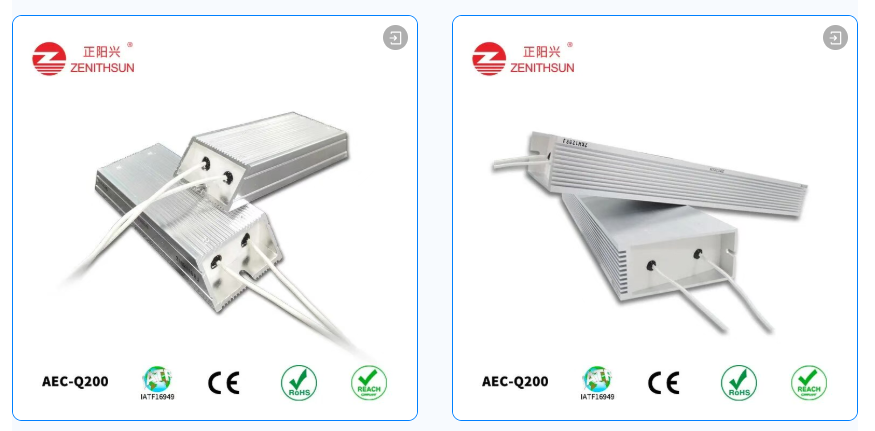
ZENITHSUN has focused on high-power resistors and load banks for more than 22 years. Our product portfolio covers brake resistor, pre-charge resistor, water-cooled resistor, high-voltage resistor, thick-film power resistor, air-cooled and liquid-cooled load banks. Our resistors are widely adopted in new energy passenger cars, heavy trucks, mining haulers and construction machinery for pre-charge circuits and frequent start-stop & deceleration scenarios. No component in a braking system is trivial. Every energy-absorbing part deserves the same rigorous standards applied to military-grade components.
Braking system reliability never relies on one single premium component. It depends on stable performance at every energy-handling stage. Mechanical brakes serve as the final stopping barrier, and the brake resistor acts as the second safety line behind them. Only when both lines are robust can heavy electric vehicles stop steadily on long slopes, under full load and in tough surroundings.
If you are working on e-drive vehicles, construction machinery or industrial braking projects and need support on selection and customisation of the brake resistor, welcome to consult our ZENITHSUN engineering team.


