

Many industry practitioners wonder why every energy storage system requires a strict pre-charging process before formal power-on. In fact, this critical safety procedure relies entirely on the Pre-charge Resistor, a compact yet core component that undertakes the crucial mission of safe power activation for energy storage equipment. As an indispensable part of the high-voltage box, alongside bus bars, sampling circuits, and secondary BMS, this aluminum-shell resistor quietly guards the stable operation of the entire energy storage system.
To understand the value of pre-charging, we first need to analyze the electrical topology of energy storage systems. A DC bus capacitor is connected in parallel to the DC side of the PCS. Without a complete pre-charging loop, closing all switches in the high-voltage box will directly transmit the full voltage of the battery cluster to the bus capacitor. Due to the inherent physical characteristic that capacitor voltage cannot change abruptly, the capacitor maintains a zero-voltage state at the moment of power-on, forming an instantaneous short-circuit state. This violent inrush current will trigger a series of severe system failures, including contactor adhesion and permanent damage, breakdown of capacitor insulating media, blown fuses, and unplanned system shutdowns, bringing huge operational losses to energy storage projects.

This is precisely why the pre-charging process becomes a mandatory step for energy storage system power-on, and professional selection of Pre-charge Resistor is the core premise of effective pre-charging protection. The scientific selection of pre-charge resistors covers three key dimensions to adapt to diverse energy storage system parameters and operating scenarios.
First, engineers must prioritize the energy bearing capacity of the resistor. The energy required for capacitor charging follows the formula E=½CV². For a typical 600Vdc energy storage system equipped with a 40mF bus capacitor, the charging energy reaches 7200J. Therefore, the selected pre-charge resistor must have an energy specification higher than this standard, with a reasonable margin reserved for repeated on-site power-on scenarios to avoid resistor burnout.
Second, resistance value selection depends on the preset pre-charging time. The pre-charging loop forms a standard RC charging circuit, where the capacitor voltage rises stably following the time constant rule (τ=R×C). Industry practice confirms that the capacitor voltage can reach 99% of the battery cluster voltage after 5 time constants. For a 2-second pre-charging cycle in a 600V system with a 40mF capacitor, the optimal resistance value is calculated as 10Ω, realizing efficient and safe charging.
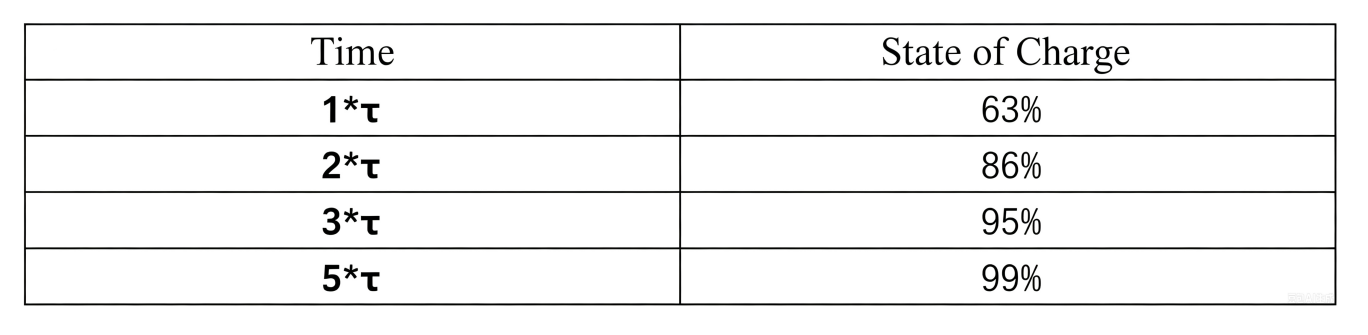
Third, the rated power of the resistor must match the instantaneous peak power (P=V²/R) of the system to ensure stable current limiting during the entire pre-charging process.
The standardized operation strategy of the pre-charging loop further maximizes system safety. The whole process is divided into two precise stages. In the pre-charging phase, the pre-charging contactor closes to connect the Pre-charge Resistor into the circuit, limiting the charging current to a safe range and enabling slow and controllable charging of the bus capacitor by the battery cluster. In the main circuit connection phase, once the capacitor voltage rises to more than 90% of the battery cluster voltage and the pre-charging is confirmed completed, the control system closes the main circuit breaker and disconnects the pre-charging contactor. The tiny voltage difference between the capacitor and the battery cluster completely eliminates destructive inrush current.
Conclusion
Seemingly inconspicuous, the pre-charging mechanism supported by the Pre-charge Resistor is an essential safety cornerstone of modern energy storage systems. It effectively avoids component damage and system faults caused by instantaneous current impact, ensures stable and long-term operation of energy storage equipment, and provides reliable, professional, and all-round safety protection for global energy storage projects.
Why Pre-charging Is Mandatory for Energy Storage System Power-On?
- Author:ZENITHSUN
- Post time:Aug-22-2026
- From:www.oneresistor.com
View: 28 views


